
Why This Matters
Low testosterone in men is a hormonal condition in which testosterone levels are consistently low and accompanied by compatible symptoms. Common signs include fatigue, reduced libido, fewer morning erections, loss of muscle mass, increased body fat, and changes in mood or motivation. Diagnosis should be based on symptoms together with appropriately timed laboratory testing—not symptoms or a single testosterone result alone.
In short: Low testosterone in men should be evaluated with data, not guesswork. Start with symptoms, confirm with labs, and decide with a clinician.
Classic and Overlooked Symptoms of Low Testosterone in Men
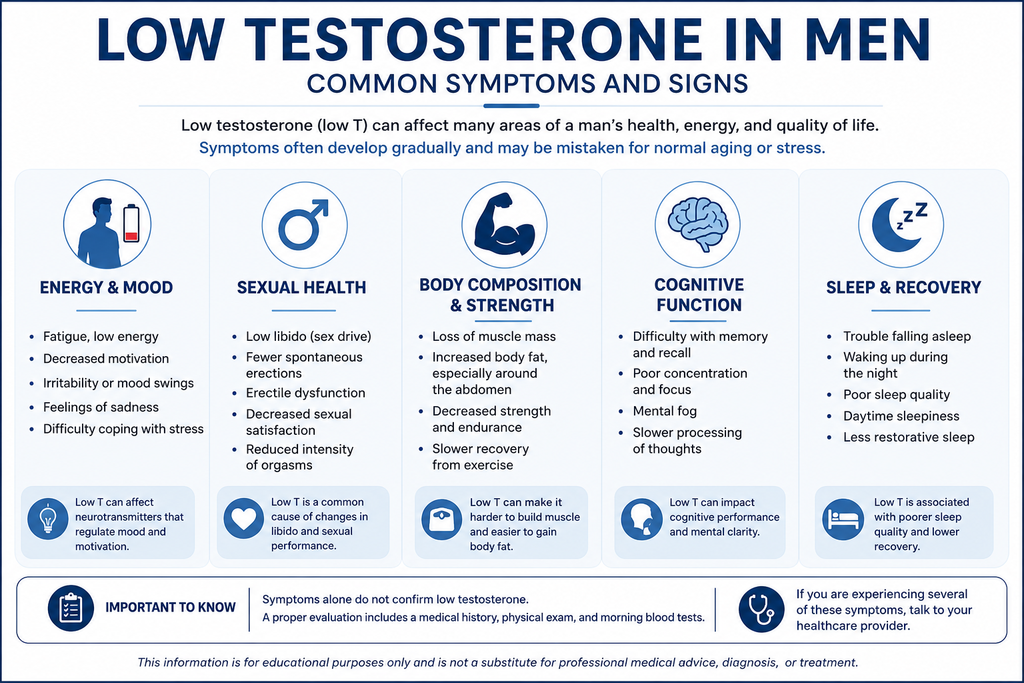
- Energy and mood: Low testosterone in men may contribute to daytime fatigue, slower recovery, irritability, and low resilience.
- Body composition: increased belly fat, reduced muscle tone, creeping weight gain
- Sexual function: low testosterone in men may contribute to lower libido, softer erections, and fewer morning erections.
- Cognition and drive: brain fog, lower ambition, less initiative
- Sleep quality: shallow sleep, snoring or apnea, irregular sleep-wake timing
Quick self-check: Have your energy, libido, and morning erections all declined over the last 6–12 months? If yes, low testosterone in men deserves a closer look with appropriate laboratory testing.
The Labs That Actually Matter (and Why)
Total Testosterone (TT)
Total T measures all circulating testosterone. When evaluating low testosterone in men, morning levels provide an important starting point, although laboratory reference ranges vary by age, assay, and clinical context. Total T alone can still be misleading, especially when SHBG runs high or low.
Free Testosterone (FT)
Free T estimates the unbound fraction available to tissues. When evaluating low testosterone in men, free testosterone can provide important context when total testosterone does not fully explain symptoms. Calculated free T, using total testosterone, SHBG, and albumin, is generally preferred over direct analog free testosterone assays when an accurate equilibrium dialysis measurement is not available.
SHBG (Sex Hormone–Binding Globulin)
SHBG binds testosterone and reduces what’s available. High SHBG (common with aging, thyroid issues, or low calorie intake) can lower free T even if total T looks fine. Low SHBG (often with insulin resistance) can inflate free T estimates.
Estradiol (E2)
Estradiol matters for libido, joint comfort, and mood. Too low can feel flat; too high can cause water retention or breast tenderness. You want balanced E2, not zero.
LH and FSH
These pituitary signals help distinguish primary testicular issues from secondary (pituitary/hypothalamic) causes. They guide whether TRT, lifestyle changes, or other therapies fit best.
Hematocrit (HCT) and Hemoglobin
TRT can raise red blood cell production. Keep HCT in a safe range with monitoring and hydration strategies. Your clinician will confirm timing and thresholds for action.
Order smart: For an initial panel, request Total T, Free T, SHBG, E2, LH, FSH, CBC (for HCT/Hgb), CMP, Lipids, A1C/fasting insulin, and TSH.
When Is Low T…Actually Low?
Diagnosing low testosterone in men requires more than looking at a single lab value. Symptoms plus data tell the story. A man at 350 ng/dL with low free T and classic symptoms may feel worse than a man at 500 ng/dL with robust free T and high SHBG.
A practical rule: If your free T and symptoms agree, you likely found the signal. If they disagree, investigate SHBG, sleep, weight, stress, and medications.
Root Causes You Can Influence
- Weight and insulin resistance: visceral fat suppresses T; strength training and protein re-balance signals.
- Poor sleep or sleep apnea: fragmented sleep blocks testosterone production; treat apnea and fix bedtime habits.
- Chronic stress: cortisol competes with anabolic hormones; downshift with breathwork, walks, and boundaries.
- Medications and alcohol: some SSRIs, opioids, and excess alcohol lower T.
- Micronutrient gaps: zinc, vitamin D, magnesium, and omega-3s support hormone health.
You can change many inputs within 4–8 weeks. Even if you choose TRT, these habits make therapy work better.
Natural Supports vs. TRT: A Decision Framework
Try Foundations First (Often 4–8 Weeks)
- Sleep: aim for 7.5–8.5 hours; screen for apnea if snoring/daytime sleepiness.
- Nutrition: adequate protein, whole-food carbs, and healthy fats.
- Training: 2–3 strength sessions + short interval cardio weekly.
- Supplements: vitamin D, magnesium glycinate, zinc (if low), omega-3s.
- Alcohol/cannabis: moderate and track effects on mood/drive.
If symptoms remain and labs confirm low free T or borderline totals, discuss TRT.
When TRT Makes Sense
- Persistent symptoms plus confirmed low testosterone: TRT may be considered when compatible symptoms are accompanied by consistently low morning testosterone levels on appropriate testing.
- Confirmed hypogonadism after evaluation: The underlying cause should be assessed, including whether the pattern suggests primary or secondary hypogonadism.
- Reversible contributors have been addressed: Sleep disorders, obesity, medications, acute illness, inadequate nutrition, and other potentially reversible factors should be evaluated when relevant.
- Benefits, risks, fertility goals, and monitoring have been discussed: TRT should be individualized and accompanied by appropriate clinical and laboratory follow-up.
Goal: Restore testosterone to an appropriate physiologic range while improving symptoms and monitoring treatment response, hematocrit, prostate-related considerations, and other relevant safety parameters.
Fertility Considerations
TRT for low testosterone in men can suppress sperm production. If you want children, discuss alternatives (e.g., SERMs) or adjuncts (e.g., hCG) to maintain fertility while optimizing testosterone. We plan this before starting therapy.
Monitoring and Safety Plan
- 6–8 weeks after starting or changing the dose: when treating low testosterone in men, check TT, FT, E2, and CBC (HCT/Hgb) and reassess symptoms.
- Every 3–6 months: repeat labs and reassess treatment for low testosterone in men based on symptoms, response, and safety markers.
- Annually: review lipids, A1C, PSA (age‑appropriate), blood pressure, and sleep status.
- Hematocrit management: hydration, donate blood if indicated, or adjust dose/frequency with your clinician.
Keep a simple symptom diary (energy, mood, libido, morning erections, workouts). Data guides dose—not internet myths.
Lifestyle Levers That Boost Results (With or Without TRT)
- Protein first: 0.8–1.0 g per lb of goal body weight supports recomposition.
- Strength training: compound lifts 2–3x/week; progressive overload.
- Sprints or intervals: 1–2 short sessions weekly for insulin sensitivity.
- Sun and sleep timing: consistent morning light and wind‑down routine.
- Stress tools: 5‑minute breathwork, daily walks, and phone boundaries.
These lifestyle strategies can support healthier testosterone levels and complement medical treatment when appropriate. For a more comprehensive approach, see our guide to testosterone optimization for men over 30.
Common Pitfalls—and How to Avoid Them
- Chasing numbers: optimizing total T without tracking how you feel leads to frustration.
- Crushing estradiol: overusing AIs can kill libido and joint comfort.
- Ignoring sleep apnea: untreated apnea undermines any protocol.
- Rare lab checks: waiting a year to re-check labs misses easy fixes.
- One-size-fits-all dosing: your SHBG, E2 response, and lifestyle are unique.
FAQ (People Also Ask)
Can I raise testosterone naturally without TRT?
Yes—sleep, strength training, weight loss, vitamin D, zinc, and stress management can help. Re‑test labs after 6–8 weeks to measure the effect.
Will TRT make me infertile?
TRT can suppress sperm count. If you want children, discuss fertility‑preserving options before starting.
How fast will I feel a difference on TRT?
Response varies from man to man and by symptom. Some changes may appear within weeks, while body composition and strength can take several months. Your physician will review your progress at follow-up visits.
Is TRT safe long‑term?
Safety depends on your health history and proper monitoring (hematocrit, hormone levels, PSA, lipids, blood pressure). Your physician can explain the benefits and risks for your situation.
Ready to Check Your Levels?
Stop guessing. Book a free consultation to review symptoms, order labs, and choose the least‑intrusive plan that gets results—whether that’s lifestyle, targeted supplements, or TRT with careful monitoring.
Telehealth available; in‑clinic visits by appointment.
References & Clinical Guidelines
- Bhasin S, Brito JP, Cunningham GR, et al. Testosterone Therapy in Men With Hypogonadism: An Endocrine Society Clinical Practice Guideline. Journal of Clinical Endocrinology & Metabolism. 2018;103(5):1715–1744. doi:10.1210/jc.2018-00229.
- Mulhall JP, Trost LW, Brannigan RE, et al. Evaluation and Management of Testosterone Deficiency: AUA Guideline. Journal of Urology. 2018;200(2):423–432. doi:10.1016/j.juro.2018.03.115.
- U.S. Food and Drug Administration. Testosterone Information: Postmarket Drug Safety Information for Patients and Providers. FDA.
- Lincoff AM, Bhasin S, Flevaris P, et al. Cardiovascular Safety of Testosterone-Replacement Therapy. New England Journal of Medicine. 2023;389(2):107–117. doi:10.1056/NEJMoa2215025.
- Endocrine Society. Statement on Testosterone Replacement Therapy. July 16, 2026.
Pingback: Erectile Dysfunction and Testosterone Therapy: 7 Critical Facts